
Call us now
08045475281

 Send Inquiry
Abrasive Railway Track Cutting Machine With Honda Engine Gx-200
Price 45000.00 INR/ Piece
MOQ : 1 Piece
Abrasive Railway Track Cutting Machine With Honda Engine Gx-200 Specification
- Drive Motor
- Petrol Engine (4 Stroke, 196cc)
- Product Type
- Abrasive Rail Cutter
- General Use
- Track Maintenance, Rail Cutting
- Material
- Mild Steel, High-Grade Steel Components
- Type
- Railway Track Cutting Machine
- Capacity
- Single Rail per Operation
- Weight (kg)
- 38 Kg
- Computerized
- No
- Automatic
- No
- Cutting Speed
- 40-60 Seconds/Track
- Cutting Thickness
- Up to 150 mm
- Cutting Function
- Abrasive Rail Cutting
- Cooling System
- No
- Drive Type
- Manual/Engine Driven
- Voltage
- Recoil Start (Petrol Engine Powered)
- Dimension (L*W*H)
- Approx. 750 x 520 x 420 mm
- Feature
- Portable, High Precision, Robust Construction, Low Maintenance
- Color
- Red & Black
- Motor
- Honda GX-200 Petrol Engine
- Mechanical Precision
- ±1 mm
- Cutting Method
- Abrasive Disc Cutting
- Control System
- Manual
- Cutting Area
- Railway Track
- Cutting Material
- Steel Rail
- Packaging Type
- Wooden crate
- Wheel Type
- Solid rubber wheels for portability
- Fuel Tank Capacity
- 3.1 L
- Service Support
- On-site and phone support by manufacturer
- Blade Mounting Type
- Flange mounted
- Safety Devices
- Spark guard, rotating safety cover, emergency stop switch
- Recommended Blade
- Resin-bonded abrasive wheel, 16 inch
- Noise Level
- 90-100 dB(A)
- Accessories Included
- Water tank kit, blade spanners, operation manual
- Operating Temperature Range
- -10C to +50C
- Engine Power
- 6.5 HP
- Engine Make
- Honda, Model GX-200
- Handle Type
- Ergonomically designed, anti-vibration
- Fuel Used
- Unleaded petrol
- Starting Method
- Recoil Starter
Abrasive Railway Track Cutting Machine With Honda Engine Gx-200 Trade Information
- Minimum Order Quantity
- 1 Piece
- Supply Ability
- 1 Piece Per Day
- Delivery Time
- 1 Days
Abrasive Railway Track Cutting Machine With Honda Engine Gx-200 About
Abrasive Railway Track Cutting Machine with Honda Engine Gx-200 is a potable power cutting device which is used to cut rails of the train tracks for the repairing and replacing purpose. It is a high speed machinery which is capable to work continuously for a longer period of time. The blade installed in the device is made up of hardened stainless steel which with a powdered coating to increase the strength and rigidity. The main drive unit of the Abrasive Railway Track Cutting Machine with Honda Engine Gx-200 which runs on petrol having a fuel tank capacity of 3.1 litre. It produces a maximum torque of 12.4 N-m at 2500 rounds per minute and a fuel consumption rate of 1.7 litres per hour at the speed of 3600 R.P.M.
Reliable Engine Power and Efficiency
The Honda GX-200 petrol engine delivers 6.5 HP, ensuring the machine runs smoothly even in demanding rail cutting scenarios. With a substantial 3.1-liter fuel tank and efficient recoil start, operators experience minimal downtime, enabling sustained high-precision cuts in a variety of weather conditions ranging from -10C to +50C.
Robust Construction and Enhanced Safety
Manufactured from mild steel with high-grade steel components, this rail cutting machine is built for longevity and stability. Safety features such as a spark guard, rotating safety cover, and emergency stop switch provide added protection for operators, making it ideal for high-traffic rail environments.
Portable and User-Friendly Design
Weighing only 38 kg with solid rubber wheels and an ergonomically designed, anti-vibration handle, this machine offers excellent portability and ease of operation. The manual control system allows users to execute precise, accurate cuts on location, supported by a convenient water tank kit and comprehensive operation manual.
FAQs of Abrasive Railway Track Cutting Machine With Honda Engine Gx-200:
Q: How does the Abrasive Railway Track Cutting Machine operate?
A: This machine operates using a manual/engine-driven system, powered by a Honda GX-200 petrol engine. The user initiates cutting by starting the engine with a recoil starter, then manually guides the flange-mounted abrasive wheel across the railway track for a precise, clean cut.Q: What materials and rail types is this machine suitable for cutting?
A: It is specifically engineered for cutting steel railway tracks, capable of handling single rails up to 150 mm thickness with its 16-inch resin-bonded abrasive disc. The machine is intended for track maintenance and repair applications.Q: When is it advisable to use this cutting machine?
A: The machine should be used whenever precise and efficient sectioning of steel railway tracks is required, such as in maintenance, repair, or track renovation projects. Its operating temperature range of -10C to +50C accommodates various working environments.Q: Where can the Abrasive Railway Track Cutting Machine be used?
A: Its robust design and portability make it suitable for on-site railway track cutting across different locations. The solid rubber wheels allow easy mobility, facilitating use in both urban rail networks and remote maintenance sites.Q: What is the process for changing the cutting blade?
A: Changing the cutting blade involves shutting off the engine completely, securing the machine, and using the included blade spanners to remove and replace the flange-mounted abrasive wheel. Ensure all safety devices, such as the spark guard and safety cover, are in position before operation.Q: How does the ergonomic handle design benefit the operator?
A: The anti-vibration, ergonomically designed handle reduces user fatigue during prolonged use and improves overall safety and cutting accuracy, ensuring comfortable handling even in challenging conditions.Q: What kind of support and accessories does the manufacturer provide?
A: Each machine comes with a water tank kit for dust suppression, blade spanners, and an operation manual. The manufacturer offers comprehensive support via on-site and phone assistance to help with maintenance and operational questions.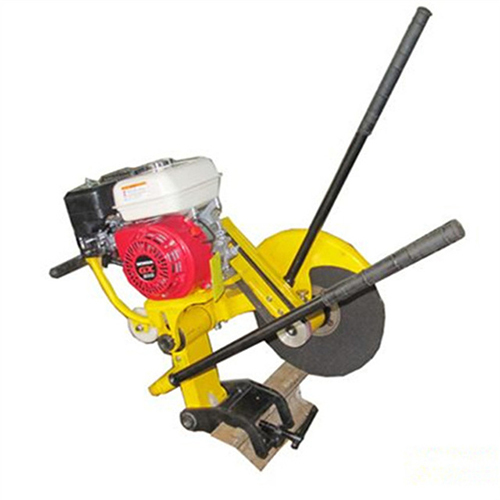
Tell us about your requirement

Price:
Quantity
Select Unit
- 50
- 100
- 200
- 250
- 500
- 1000+
Additional detail
Mobile number
Email

More Products in Railway Track Cutting Machine Category
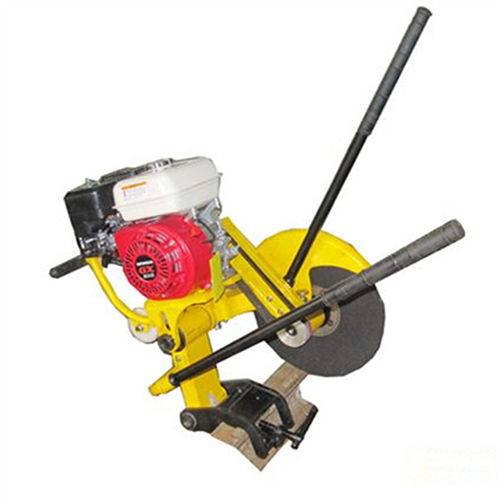
Abrasive Railway Track Cutting Machine
Price 36000.00 INR / Piece
Minimum Order Quantity : 1 Piece
Cutting Method : Abrasive Disc Cutting
Cutting Area : Suitable for standard railway tracks up to 70 mm rail height
General Use : Precisely cuts rail tracks for maintenance and repairs
Drive Type : Other, Petrol Engine Driven

A ONE INDUSTRIES
India's Number One Manufacturing Company
India's Number One Manufacturing Company
8/78, Street No -8, Anand Parbat Industrial Area,New Delhi - 110005, India
Phone :9310245050
 Send Inquiry
- Floor Cleaning Machine
- Railway Track Cutting Machine
- Floor Polishing Machine
- Concrete Machinery
- Groove Cutting Machine
- Power Trowel
- Constuction Machinery
- Carpet Cleaning Machine
- Concrete Cutting Machine
- Core Drilling
- Floor Scrubbing Machine
- Polishing Machine
- Floor Grinding Machine
- Power Floater
- RCC Groove Cutting Machine
- Chemical Processing Pump
- Sanitizer Spray Machine
- Vaccum Cleaner
- Mining Equipment
- Concrete cutting blade
- Railway Track Drilling Machine
- Scrubber Drier
 Send Inquiry
 Send SMS
A ONE INDUSTRIES
All Rights Reserved.(Terms of Use)
Developed and Managed by Infocom Network Private Limited.
Developed and Managed by Infocom Network Private Limited.

